
You sign the lease, you get the keys, you walk into your new place… and then you see it: blank beige walls that look like they’ve never met a personality in their entire life. If you’re renting in the U.S. or Canada, you probably know the feeling. You want the space to look “yours,” but the moment you think about nails, anchors, and patching drywall at move-out, your motivation drops. And that’s exactly why rental-friendly wall decor ideas without drilling aren’t just a cute Pinterest trend—they’re a practical strategy for making a rental feel like home without creating the kind of wall damage that gets itemized against your security deposit.
The good news is you don’t have to choose between style and caution anymore. Today’s no-drill options can look polished, intentional, and frankly expensive—if you use them the right way. The not-so-good news? Many renters still learn the hard way by peeling paint, ripping drywall paper, or hanging something “just for now” that slowly slides down the wall like a sad metaphor. This guide is designed to keep you out of that cycle. We’ll talk about what landlords typically care about, which solutions actually stay up, how to style them so your home doesn’t look temporary, and how to remove everything cleanly when it’s time to move.
Why rental-friendly wall decor matters more than you think
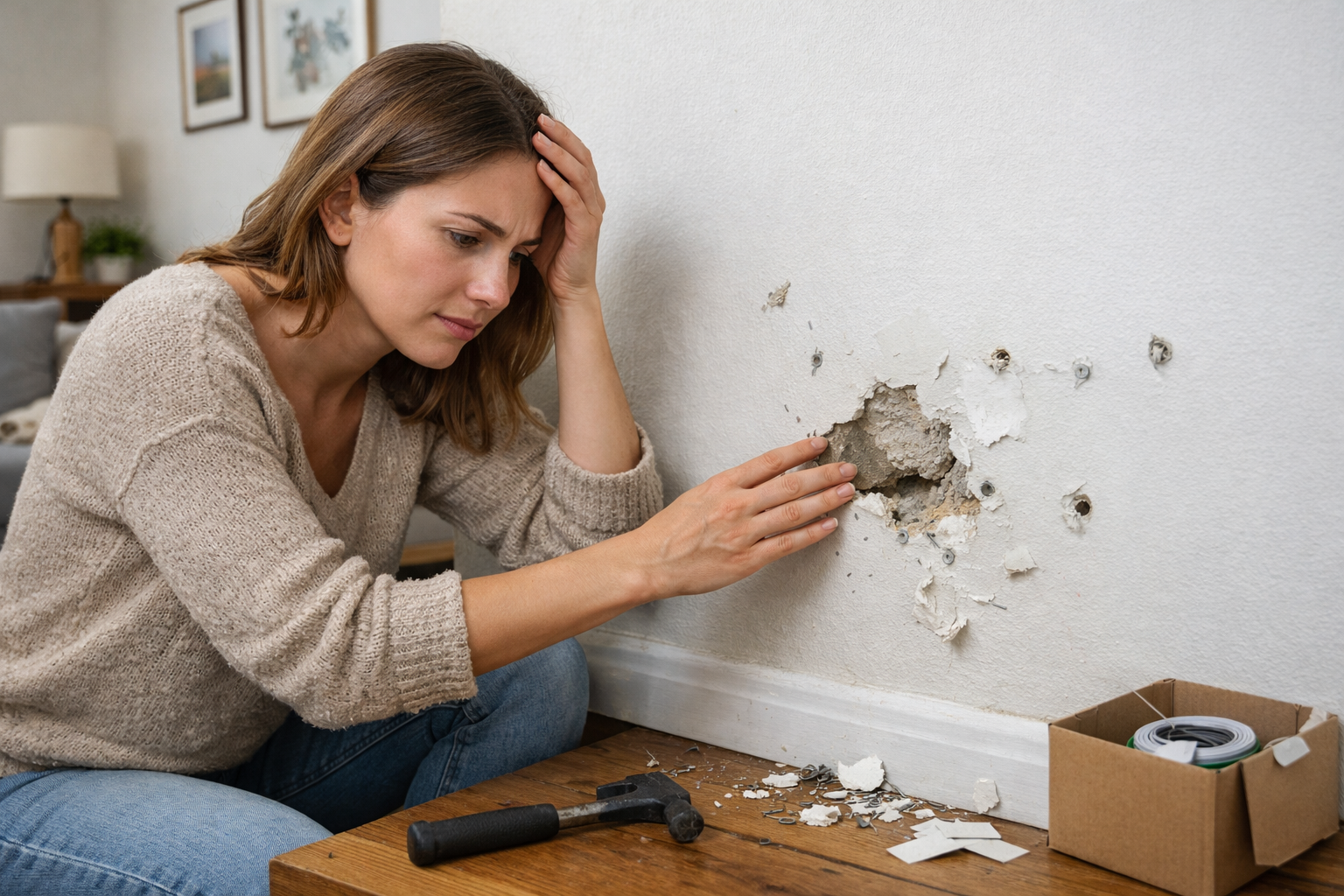
Before we get into the fun stuff—art walls, removable wallpaper, and that “how is this even staying up?” magic—it’s worth getting honest about why rentals feel so risky to decorate in the first place. Most renters aren’t afraid of design. They’re afraid of consequences. A wall is never just a wall in a rental; it’s a potential line item on a move-out statement. Once you understand how landlords and property managers think about wall condition, it becomes much easier to decorate confidently and responsibly.
The real cost of wall damage in rental homes
Security deposits are supposed to be a safety net, not a surprise bill. But in practice, deposit disputes often come down to one question: is what you did considered “normal wear and tear,” or is it damage? HUD guidance and many landlord resources draw a clear line between expected aging from everyday use and avoidable damage that requires repair beyond routine maintenance. Small marks, worn finishes, and everyday scuffs typically fall into wear and tear, while bigger issues—like gaping holes, unapproved wallpaper, or significant surface damage—are treated differently. One HUD-oriented example list even calls out “gaping holes in walls” and unapproved wallpaper as tenant damage categories, which is exactly why careful choices matter when you’re decorating. If you’ve ever heard someone say, “It’s fine, I’ll just patch it later,” that’s the kind of thinking that can get expensive. normal wear and tear isn’t a loophole; it’s a standard, and the burden of proof often ends up feeling like it’s on the renter.
What makes wall damage tricky is that it’s rarely one dramatic moment. It’s usually a handful of small decisions that add up: a nail here, an anchor there, a heavy mirror hung on a cheap hook, a sticky strip ripped off sideways, a poster taped with something that should’ve stayed in middle school. Then you move out and the wall looks like a before-and-after of bad impulses. In many properties, especially professionally managed buildings, the move-out process is standardized. That means they don’t “eyeball it.” They document, they price repairs, and they move on. If you want to keep your deposit intact, you have to think like someone who wants to avoid repair work for the next tenant.
Can you really personalize a rental without drilling?
Here’s the mindset shift that changes everything: you’re not decorating “a wall.” You’re building visual weight, texture, and focal points. Drilling is just one way to do that, and it’s not always the best way even in a home you own. A room feels finished when there’s a clear point of interest, when the scale of decor matches the space, and when the details repeat in a way that looks intentional. None of that requires a nail. What it requires is choosing the right mounting method for the surface, using proportion strategically, and treating removable items like real design elements—not temporary placeholders.
Think about the rentals you’ve walked into that instantly felt warm: maybe there was oversized art leaning on a console, a mirror catching light, a textile piece adding softness, or a styled shelf that looked curated. Those moments come from composition and texture, not hardware. The myth is that “renter-friendly” automatically equals flimsy or juvenile. In reality, the best no-drill solutions are designed to look invisible. When they’re done well, guests don’t notice the method. They notice the vibe.
Expert insight: thinking long-term in a temporary space
The smartest renters treat decor like a wardrobe: you invest in versatile pieces that work in multiple “outfits,” not one overly specific look that only fits one apartment. When you buy or DIY wall decor, ask yourself, “Will this still work if I move to a place with different light, different wall texture, or different layout?” That’s why modular decor wins. Removable wallpaper panels can shift from an accent wall to the back of a bookshelf. A set of frames can become a gallery wall now and a hallway moment later. Even a simple textile hanging can move from bedroom to living room depending on what your next place needs.
It’s also why learning the removal process is part of the decor plan, not an afterthought. If you know exactly how you’ll take something down, you’ll pick better products, you’ll prep the wall correctly, and you’ll avoid the panic removal at midnight the night before the final walk-through. You can start thinking about your move-out plan early with something like an move-out checklist, and yes, that includes how your decor comes off the wall.
The best no-drill wall decor solutions that actually stay up
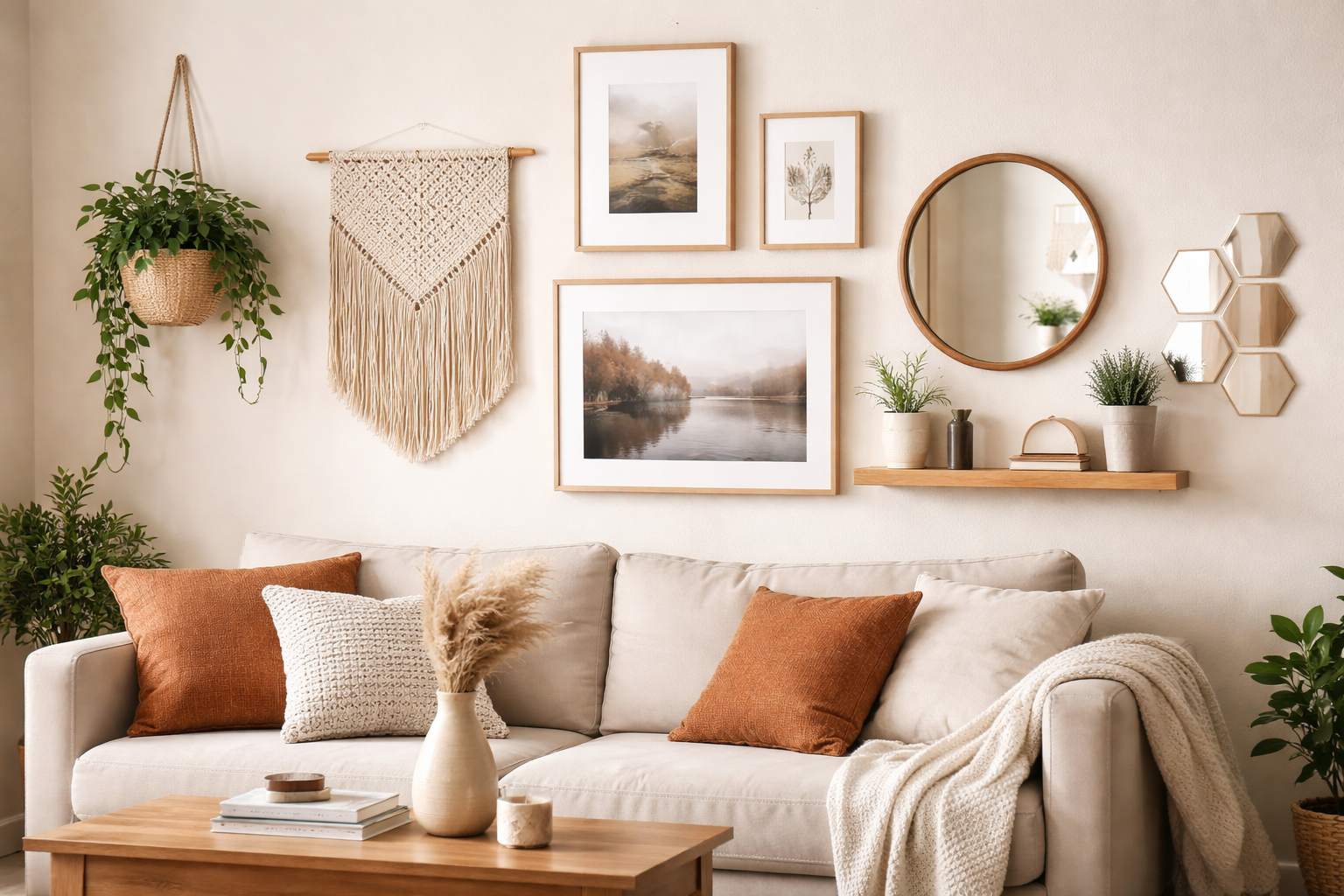
Let’s talk about what works in real apartments, not just staged photos. Staying power is the difference between “this looks amazing” and “why is my frame sliding down again?” The key is matching the solution to the weight, the wall surface, and the environment. Humidity, texture, and paint finish all change the game, so the best renters aren’t just decorating—they’re problem-solving.
Adhesive hooks, strips, and mounting systems (that won’t peel paint)
High-quality removable mounting strips are one of the most reliable ways to hang art without drilling, especially if you’re working with standard painted drywall. But they’re also one of the most commonly misused tools in rentals. The biggest mistake isn’t the product—it’s the removal. Many strips are designed to release when you pull them straight down, slowly, keeping tension close to the wall rather than yanking outward. If you’ve ever ripped paint off with an adhesive strip, there’s a good chance it wasn’t the “strip’s fault.” It was the angle and speed of removal. 3M’s own guidance emphasizes not pulling away from the wall and instead stretching the tab straight down along the wall surface. That detail sounds small until you’re staring at a peeled patch the size of a credit card. picture hanging strips can be incredibly renter-friendly when you follow the directions like your deposit depends on it—because it does.
In practice, the best approach is to treat adhesive mounting like a system, not a shortcut. Clean the wall first (more on prep later), wait the recommended time before hanging weight, and respect the load rating. When a strip says it holds a certain weight, that’s under ideal conditions: smooth surface, clean paint, correct cure time, and a stable environment. If your wall has texture, if the paint is matte and slightly chalky, or if you’re in a humid space, your “real-world” capacity may be lower. The sweet spot for adhesives is framed prints, small mirrors designed for adhesive mounting, lightweight wall shelves made for rentals, and decorative objects that don’t pull the wall forward.
Another detail that separates amateurs from pros is distributing weight. Two smaller frames can often be easier than one heavy piece, but there’s also a style advantage to going larger if you do it with the right method. A lightweight oversized frame (think acrylic front instead of glass) can create a designer focal point without the stress of a heavy load. That’s how you get the “custom” look while staying inside the rules of renting.
Peel-and-stick wall art, murals, and decals
Peel-and-stick products are the fastest way to transform a rental because they create the illusion of a major renovation without the commitment. The trick is choosing designs and placements that feel intentional rather than temporary. A full accent wall can be stunning, but even a smaller application—like a “panel” behind a desk, or a framed rectangle of wallpaper behind a bed—can feel architectural when it’s done with clean edges and good scale.
It’s also worth noting that peel-and-stick has matured. This isn’t the flimsy sticker era. Many modern versions are designed to be removable and easier for DIYers because you don’t need paste, you’re not racing against drying time, and you can reposition sections during installation. Design publications have highlighted how the mess-free application and removability make it a strong option for renters, especially when you follow brand instructions and test a small area first. peel-and-stick wallpaper can look sophisticated if you avoid overly tiny prints that visually “buzz” on the wall and instead choose patterns with breathing room, or textured solids that mimic plaster, linen, or grasscloth.
If you’re worried about landlord rules, remember that some leases specifically prohibit wallpaper unless approved, and HUD-style guidance lists unapproved wallpaper as a potential damage category. That doesn’t mean you can’t use it; it means you should be thoughtful. Use truly removable products, avoid putting them on fragile paint, and consider applying them to furniture surfaces instead of walls if your place has questionable paint quality. You can line the back of a bookshelf, wrap the front of a cabinet, or create art panels on foam board that hang with removable strips. The look is similar, but the risk is lower.
Tension rods, leaning frames, and creative alternatives
If adhesives feel intimidating, you’re not out of options. Some of the most “designer” rentals I’ve seen use gravity and structure rather than attachment. A large frame leaning on a console reads modern and intentional, especially when you add a small lamp or vase in front of it to create depth. The key is scale: a tiny frame leaning on the floor looks lost, but an oversized piece becomes a focal point. This approach is also incredibly move-friendly. When it’s time to relocate, you don’t remove anything—you just pick it up.
Tension rods are another underrated tool. They’re commonly used for curtains, but they can also support lightweight decor, fabric panels, or even hanging planters in front of a window if you keep the load reasonable. In small apartments, tension-based solutions create vertical interest without putting pressure on the wall. Combine that with a few frames placed on shelves, bookcases, or picture ledges that are themselves freestanding, and suddenly your “wall decor” isn’t all on the wall—it’s in the wall zone, which still counts visually.
If you want a cohesive living space, these alternatives pair beautifully with layout guidance like apartment layout ideas, because the best wall decor is the kind that works with furniture placement and sight lines. A leaning frame behind a chair, a textile above a sofa, and a mirror near the entry can guide the eye through the room like a well-designed story.
Stylish rental-friendly decor ideas by room
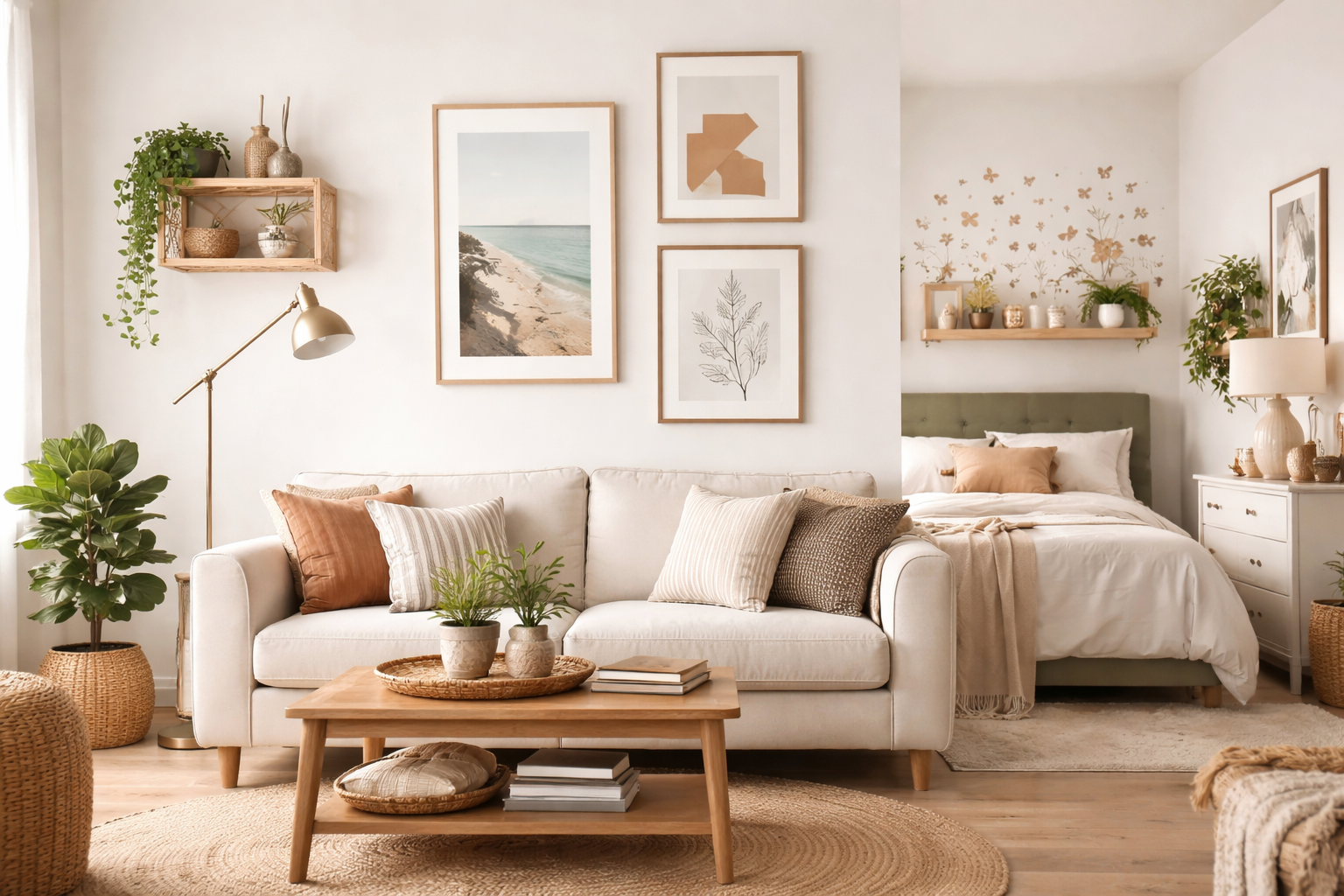
Different rooms come with different pressures. The living room is where you want impact and polish because it’s where you host. The bedroom is where you want softness and calm because it’s where you recharge. And small spaces demand efficiency because every visual decision pulls more weight. When you decorate room-by-room, you can match the method to the function—and you avoid the trap of using one solution everywhere just because it’s easy.
Living room: create a focal point without nails
The living room is the perfect place for a no-drill “anchor moment.” Most rentals have a blank wall behind a sofa, a TV wall that feels unfinished, or an entry zone that needs definition. This is where removable mounting strips can shine, but only if you treat your wall like a curated gallery rather than a collage. A gallery wall looks expensive when the spacing is consistent, the frame finishes relate to each other, and the art shares a common visual theme. You don’t need matching frames; you need harmony. Black frames, warm wood, and a couple metallic accents can work together if you repeat each finish at least twice, so nothing looks random.
Another living room upgrade that renters love is a statement mirror. Mirrors make a room feel brighter and bigger, which is gold in apartment living. The catch is weight. If you want a mirror without drilling, choose one designed for lighter mounting or use a floor mirror that leans securely. A large leaning mirror near a window can bounce light and make the room feel more open without touching the wall at all. If you do mount a mirror with adhesive-rated hardware, be conservative with weight and placement. Avoid areas where people might bump it, like tight entry corridors, because stability matters as much as style.
Fabric wall hangings and tapestries are another living room hero because they add warmth and texture, soften echo in open-plan spaces, and feel cozy without being juvenile. The difference between “college dorm” and “elevated” comes down to fabric choice and how you hang it. Natural textures like woven cotton, linen blends, and subtle patterns tend to look more mature than loud graphics. If you want it to feel designer, treat it like a panel: hang it taut, align it with furniture edges, and choose a size that fits the wall like it belongs there.
Bedroom: cozy, personalized, and damage-free
Bedrooms can be deceptively hard to decorate because the bed dominates the space. If the wall above the headboard is blank, the room can feel unfinished—even if everything else is nice. But drilling above a bed is exactly where renters get nervous, and for good reason. A safe and stylish alternative is creating a “headboard illusion” using removable wallpaper panels or fabric. Imagine a rectangle of peel-and-stick wallpaper behind the bed, sized slightly wider than the mattress. That framed panel acts like a headboard, especially if you choose a pattern with texture or subtle contrast. It’s visual architecture without construction.
String lights are another popular choice, but they’re easy to overdo. The goal is cozy ambiance, not a tangled web. Use warm-toned lights, choose a simple shape, and anchor them with removable clips that are designed for wires. Keep the lines clean. If you’re placing lights near the ceiling, follow the room’s geometry instead of making random swoops. A straight run that outlines a corner feels modern; a chaotic zigzag often looks accidental. And if you’re renting a pre-1978 home, remember that certain renovation activities can have added considerations around lead paint disclosure and safe practices, which is why it’s always smart to keep your approach non-invasive and low-risk. The EPA explains that landlords must disclose known lead-based paint hazards in pre-1978 housing and provide the official pamphlet, which is one more reason renters benefit from decor that doesn’t disturb surfaces. lead disclosure is part of the rental landscape, even if you never see it as a day-to-day concern.
For art above the bed, think in grids and sets rather than single tiny pieces. A minimalist grid of four or six frames can look intentional and symmetrical, which suits a bedroom. If you want something softer, a textile piece or a set of framed prints in muted tones can help the room feel restful. If you’re designing a smaller bedroom, you’ll also appreciate practical space planning tips like small bedroom decor, because what you put on the wall should support how the room functions—not fight it.
Small spaces & apartments: maximizing visual impact
Small apartments punish clutter. That doesn’t mean you can’t decorate—it means every wall moment should do a job. Mirrors are the obvious example: they reflect light and make rooms feel larger. But there are other high-impact strategies that don’t require drilling. One is vertical emphasis. When you bring the eye upward—through taller art, vertical panels, or elongated mirrors—you make the ceiling feel higher. Another is using “zones.” In a studio or open-plan layout, a removable wallpaper panel behind a desk or dining table can create separation without a physical divider. It signals function and adds depth to the space.
Temporary wall molding effects are also trending for a reason. With careful measuring and peel-and-stick trim products (or faux paneling created with removable materials), you can mimic the look of wainscoting or picture-frame molding without touching the wall permanently. The trick is restraint. In a small space, one well-executed feature wall is more powerful than multiple competing areas. If you want your apartment to look intentional, pick one signature moment and let everything else support it.
How to protect your walls (so you actually get your deposit back)
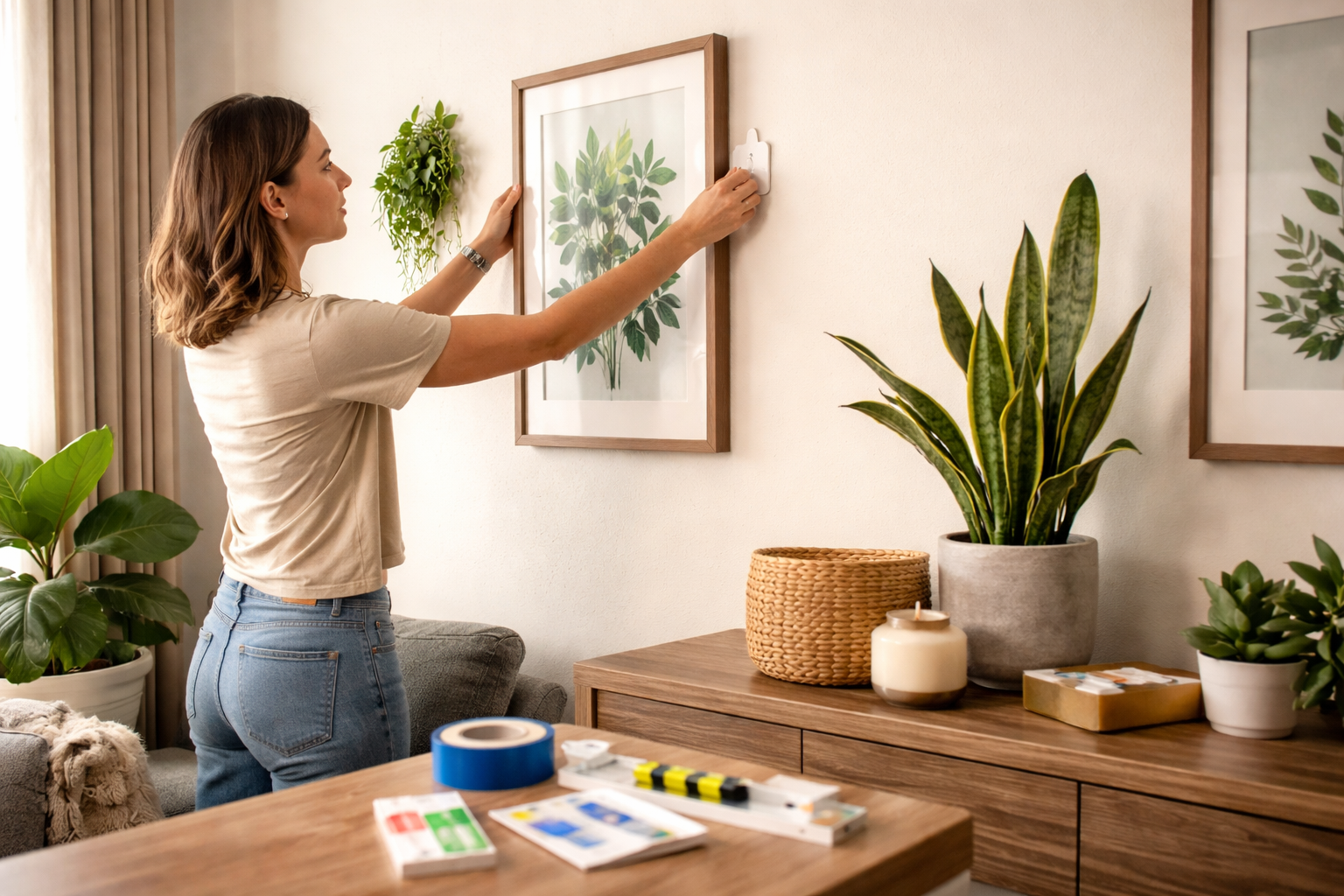
This is the part renters tend to skip—until the move-out walk-through is suddenly on the calendar. But wall protection isn’t just about being cautious. It’s what lets you decorate more boldly, because you’re building your style on top of a safety plan. If you prep properly, choose the right products, and remove them correctly, you can personalize your rental without leaving the kind of evidence that triggers deductions.
Surface prep and removal techniques
Prep sounds boring, but it’s where success starts. Adhesives fail for two reasons: dirty surfaces and rushed timelines. Many walls collect invisible dust, especially around vents and high-traffic zones. Add a little cooking residue in an open kitchen layout or a bit of humidity film in a bathroom, and suddenly your “strong adhesive” isn’t bonding to paint—it’s bonding to grime. That’s why a quick wipe-down matters. Use a gentle cleaner appropriate for painted walls, let the surface dry fully, and avoid applying adhesives to freshly painted areas. Fresh paint may feel dry to the touch but still be curing underneath, and that increases the risk of peeling later.
Removal is the second half of the equation, and it’s where renters win or lose. If a product includes a release tab, treat that tab like your best friend. Slow, steady tension is your strategy. If you rush, yank outward, or try to rip it off in one dramatic motion, you’re basically asking the paint to come with it. Manufacturer directions exist for a reason, and 3M specifically warns against pulling away from the wall when removing their picture hanging strips. remove strips the way they’re designed to be removed: close to the wall, downward, and patient.
A practical pro tip is to plan removal time when you’re not stressed. If you know you’re moving out on a Saturday, don’t remove everything Friday night at 11 p.m. Give yourself a cushion. If a strip feels stuck, you can warm it slightly with a hair dryer on low to soften adhesive, then continue slowly. You’re not trying to “win” against the wall; you’re trying to leave it looking like nothing happened.
Weight limits, humidity, and wall types explained
Weight limits aren’t a suggestion. They’re physics. Adhesives handle shear force (downward weight) differently than pull force (forward tug). Frames tend to sit flat and behave well. Heavy decor that pulls forward, like deep shelves or large mirrors with protruding frames, creates more leverage and increases failure risk. That’s why you should be conservative with anything that sticks out from the wall. If you want shelves, choose freestanding units or ladder shelves that lean safely and distribute weight to the floor.
Humidity changes everything. Bathrooms, kitchens, and laundry areas are the worst places for adhesives. Steam and moisture can weaken the bond, and temperature changes can cause materials to expand and contract. If you want decor in these spaces, aim for lightweight items, use products rated for humidity if available, and consider alternatives like leaning art on a shelf or using tension rods. Textured walls also reduce surface contact, which reduces adhesive grip. On textured walls, you may need to rely more on freestanding decor, fabric hangings that use minimal mounting points, or removable solutions that adhere to a board rather than directly to the wall.
Paint type matters too. Matte and flat paints are more porous and can be more fragile. Semi-gloss is usually tougher and easier to clean, which often means adhesives release more cleanly—but it depends on paint quality and age. If your rental has bargain paint or a wall that’s been repainted repeatedly, be extra cautious. Test a small, hidden area first. It’s a small step that can prevent a very annoying problem.
When to ask your landlord first
Some renters avoid asking landlords anything because they worry it will draw attention. But in many cases, a simple question can save you from a major deposit dispute. If you’re considering anything that could be interpreted as a permanent change—like wallpaper, even removable wallpaper—it’s worth reviewing your lease and asking for clarification. Some leases allow small nail holes but prohibit adhesives that might damage paint. Others are the opposite. The point is: you don’t want to be surprised later by a rule you could have clarified upfront.
If your landlord or property manager is reasonable, framing matters. Instead of asking, “Can I put wallpaper up?” try, “Do you allow removable wall coverings that come off without residue?” That signals you’re thinking about move-out condition. If you get approval, keep it in writing. If you don’t get approval, you can still achieve the look through removable panels mounted on foam board or framed art that mimics wallpaper patterns.
Also, remember that landlords often care less about what you did and more about whether they have to fix it. If you can demonstrate that your plan won’t require patching, sanding, repainting, or cleanup, you’re much more likely to get a green light. In other words, speak their language: time, labor, and cost.
Budget-friendly rental decor that looks designer
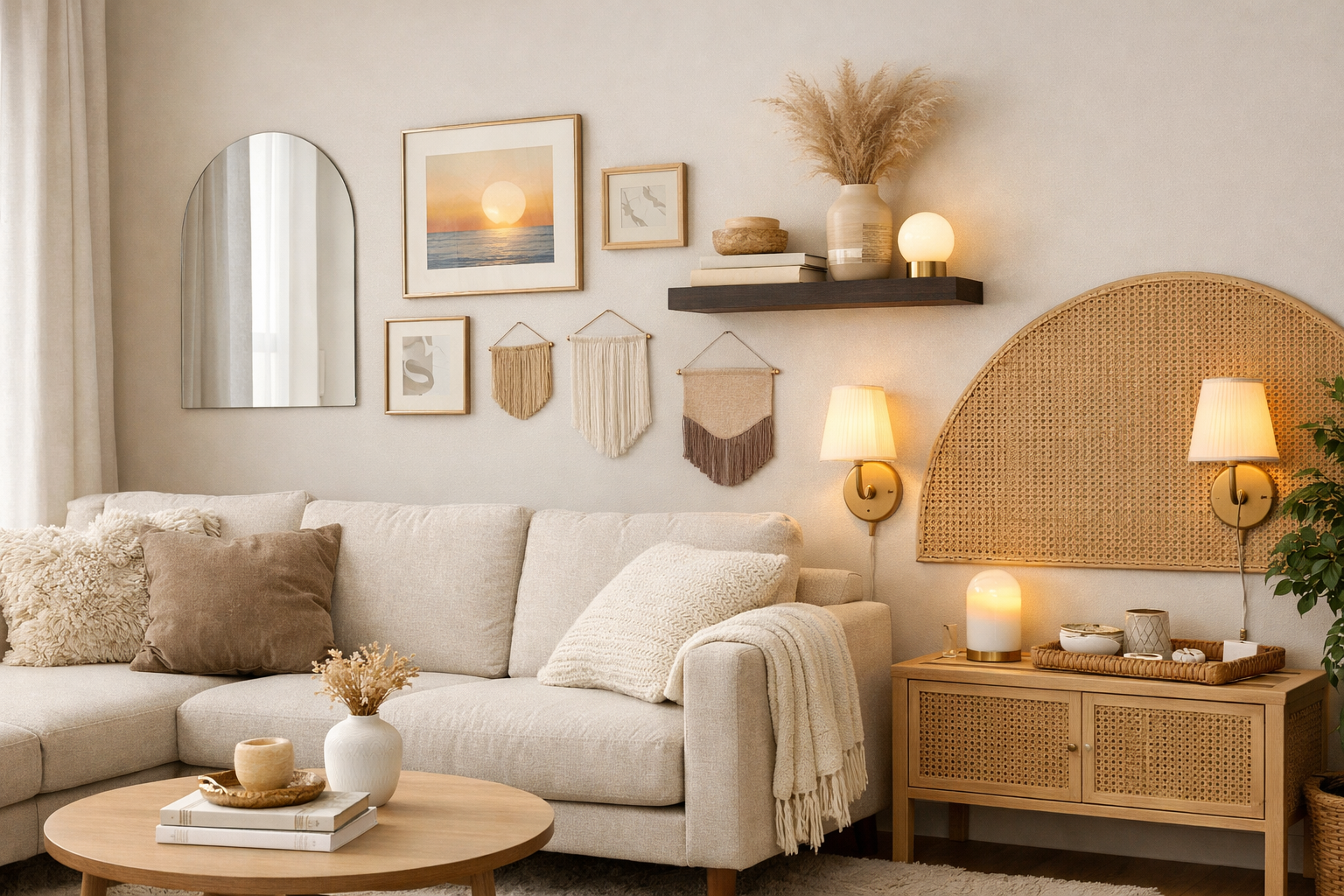
You don’t need a huge budget to make a rental feel expensive. You need a strategy. Designer-looking spaces usually share a few qualities: cohesive color, intentional scale, and a mix of textures that create depth. The budget version isn’t about buying cheaper things; it’s about using your money where it shows and saving where it doesn’t. When you’re decorating without drilling, the smartest investments are often in pieces you can reuse across apartments.
Affordable decor that looks high-end
One of the most persuasive “designer tricks” is framing. Even inexpensive prints look elevated when they’re in frames that match your space. The secret is to keep your frame finishes cohesive and your sizes deliberate. If you mix random frame sizes with random spacing, it reads chaotic. If you pick two or three sizes and repeat them, it reads curated. Thrift stores are your friend here, especially if you’re willing to spray-paint mismatched frames into a unified finish. It’s not about the price tag; it’s about the final composition.
Fabric as wall decor is another budget win. A well-chosen textile can look like a high-end wall hanging or even a custom art piece, especially if you stretch it over a frame or mount it as a clean panel. This works beautifully for renters because textiles are lightweight, forgiving, and easy to move. You can also use fabric to soften harsh rental lighting and add warmth to minimalist furniture. If your space feels “cold,” this is one of the fastest ways to fix it.
And don’t underestimate the power of one oversized moment. Small decor scattered everywhere often looks cheaper than one large piece that’s styled well. A big frame leaning on a console, a tall mirror, or a large textile panel can instantly upgrade a room. It’s the same reason a tailored blazer elevates a basic outfit. You’re creating a focal point that tells the eye, “This is intentional.”
Reusable decor you can take to your next apartment
Reusability is where renters win long-term. Modular decor—like a set of frames, a mirror, a freestanding shelf, or a signature textile—moves with you and adapts. If you buy with your next apartment in mind, you stop wasting money on things that only fit one wall in one place. This is also where leaning and freestanding decor is so powerful. You can design a gorgeous wall moment using a console table, a leaning frame, and a lamp, and none of it requires mounting.
Portable accent lighting matters too. Wall decor isn’t only what’s on the wall; it’s how the wall is lit. A soft lamp, a picture light that clips onto a frame, or even plug-in sconces that mount with removable strips can add a layer of polish. The room feels intentional because it has ambiance, not just objects.
DIY vs. store-bought: what’s worth the investment?
Here’s a practical rule: invest where safety and longevity matter, DIY where style and customization matter. For example, spend on quality mounting products and strong frames, because those protect your walls and your belongings. DIY your art, your styling, and your panels, because that’s where creativity shines. If you’re hanging anything valuable, you want your mounting method to be dependable and your removal method to be safe. That’s not the place to gamble with mystery adhesives.
On the style side, DIY can be surprisingly high-end when it’s done with restraint. A simple set of prints on thick matte paper can look gallery-worthy when framed and spaced properly. A fabric panel can look custom. A removable wallpaper “frame” behind the bed can look like architecture. The goal isn’t to impress someone with your budget. The goal is to make the space feel cohesive, comfortable, and personal—without giving your landlord a reason to deduct for repairs.
Common mistakes renters make with no-drill decor
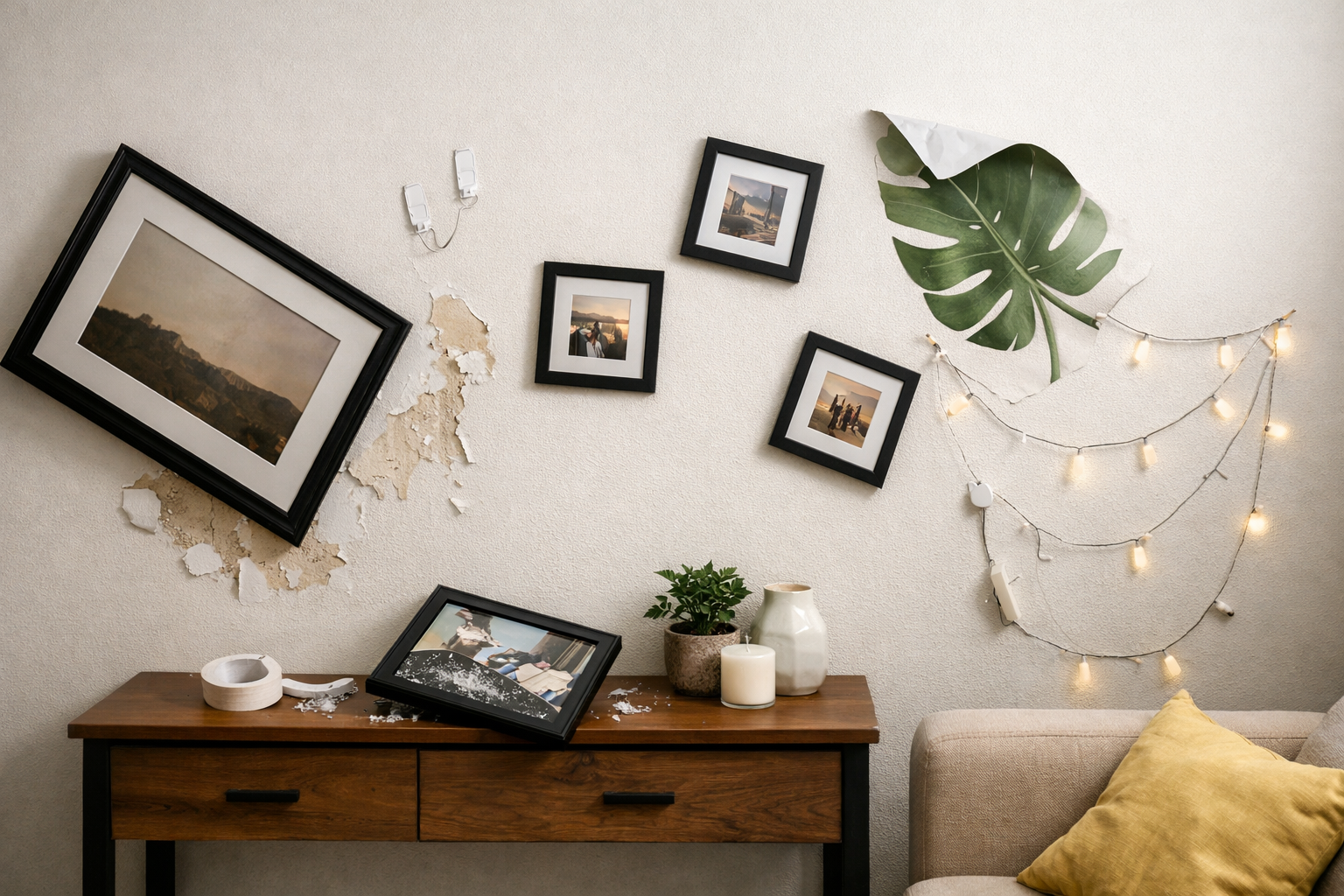
If no-drill decor ever felt “unreliable,” there’s a good chance you’ve seen one of these mistakes play out. The problem isn’t that renter-friendly decor doesn’t work. The problem is that renters sometimes treat it like it’s risk-free. It’s not risk-free; it’s risk-managed. And once you understand the common failure points, you can avoid them easily.
Overloading adhesive hooks
This one is classic: you hang something, it stays up for a week, and you assume it’s fine. Then one day you hear a thud and realize gravity was just waiting. Adhesives can fail over time if they’re overloaded, if the wall wasn’t prepped, or if the environment changes. A hook might hold a lightweight frame beautifully, but it may not handle a heavy mirror, especially if the mirror is bumped or the wall is humid. The most common mistake is treating a load rating like a challenge instead of a guideline. If the maximum is, say, a certain weight, you don’t aim for the maximum. You aim below it—especially for anything breakable.
If you want heavier impact, choose lighter materials. Acrylic frames instead of glass. Lightweight mirror styles instead of thick ornate frames. Or, better yet, use a floor mirror or a leaning frame. The outcome is the same visually, and the risk is much lower.
Ignoring wall texture and paint type
Textured walls and fragile paint are the silent enemies of adhesive decor. Texture reduces contact area, which reduces grip. Flat paint can be more prone to peeling because it’s less durable. Older paint layers may have weak bonding to the wall, so even a “gentle” adhesive can pull a layer off if the paint was never properly prepped. If you’re in a newer build with smooth walls and decent paint, you can get away with more. If you’re in an older unit with questionable paint, you should be conservative and test first.
Testing isn’t complicated. Apply a small strip in a hidden spot, wait, then remove it correctly. If the paint stays intact, you’re likely safe to proceed. If not, shift your plan toward freestanding decor, leaning frames, textiles, or mounted-on-board panels that don’t touch the wall directly.
Choosing trendy over timeless
Trends are fun, but rentals reward flexibility. When you pick something extremely specific—like a very bold pattern or a niche theme—you may love it now but feel stuck later. That’s especially true when your next apartment has different light or different flooring. Timeless doesn’t mean boring. It means adaptable. Neutral backdrops with one or two statement moments tend to age well and move well.
If you want trend energy, put it in small, removable, low-risk choices: a set of prints, a swap-in textile, a decorative object on a shelf. Let your bigger elements be calmer: frames, mirrors, core color palette. That’s how your apartment stays stylish without looking like a time capsule six months later.
Câu hỏi thường gặp (FAQ)
Do adhesive hooks damage walls in apartments?
They can, but they don’t have to. Most wall damage happens when renters remove adhesive products incorrectly or apply them to fragile paint. High-quality removable systems are designed to release when pulled the right way, often by stretching a release tab straight down close to the wall rather than yanking outward. Following the manufacturer’s removal method is the difference between a clean wall and peeled paint. It also helps to prep the wall first by cleaning dust and residue, and to avoid applying adhesives to freshly painted or poorly bonded paint. When in doubt, test one strip in a hidden area first.
What is the best way to hang pictures without drilling?
For most renters, removable picture hanging strips are the best balance of security and clean removal—especially for lightweight to medium-weight frames on smooth painted drywall. The key is matching the strip rating to the frame’s weight and allowing the adhesive to set before you hang the frame. If your walls are textured or the paint is delicate, a safer alternative is leaning frames on a console, dresser, or shelf so you get the visual impact without relying on the wall surface. You can also use freestanding picture ledges or bookcases to create “wall zones” that look decorated without actual wall mounting.
Can you use peel-and-stick wallpaper in a rental?
Often yes, but it depends on your lease, your wall surface, and the product quality. Some landlords consider wallpaper a modification and may require approval, even if it’s marketed as removable. Before committing, check the lease language and test a small patch on an inconspicuous area to see how the paint reacts when removed. If you’re concerned, you can still get the same look by mounting peel-and-stick wallpaper onto foam board or thin panels and hanging those with removable strips. That method creates a feature wall effect while minimizing risk to the actual wall paint.
How much weight can no-drill wall hooks hold?
It varies widely by product and conditions, which is why you should treat weight limits as “best-case scenario” numbers. Smooth, clean walls in climate-controlled rooms will support more than textured walls in humid spaces. Frames that sit flat typically perform better than objects that protrude and pull forward because leverage increases strain on the adhesive. If you’re hanging something valuable or heavy, it’s smarter to downsize the weight (lighter frame materials) or use a non-mounted approach like leaning art or using a floor mirror. The goal is a stable setup over months, not a temporary hold.
How do you decorate textured walls without nails?
Textured walls reduce adhesive contact, so your most reliable strategy is shifting away from wall-mounted solutions and toward floor-supported design. Leaning oversized frames, using tall bookcases, styling picture frames on shelves, and hanging textiles with minimal mounting points can all work well. If you want something that reads like a feature wall, consider creating removable panels by applying wallpaper or fabric to boards and then hanging the panels with strips rated for the panel’s weight. You still get color and pattern, but you’re not forcing adhesives to fight against an uneven surface.
Should I ask my landlord before using removable wall decor?
If your decor plan includes anything that could be seen as a surface change—like wallpaper, large decals, or adhesive systems that might affect paint—it’s wise to check your lease and ask for clarification. Many landlords care less about the method and more about the outcome: will the wall need repair when you move out? A quick written confirmation can protect you later, especially if policies are strict or if you live in a professionally managed building with standardized inspections. If approval feels unlikely, you can still personalize your space using panels, leaning art, and freestanding decor that doesn’t alter the wall at all.
At the end of the day, the best rental-friendly wall decor ideas without drilling are the ones that make your home feel personal today and leave your walls looking untouched tomorrow. When you choose the right products, respect your wall type, and remove everything patiently and correctly, you’re not “settling” for renter decor—you’re mastering a smarter way to style. And once you get that confidence, blank walls stop feeling like a limitation and start feeling like an opportunity.